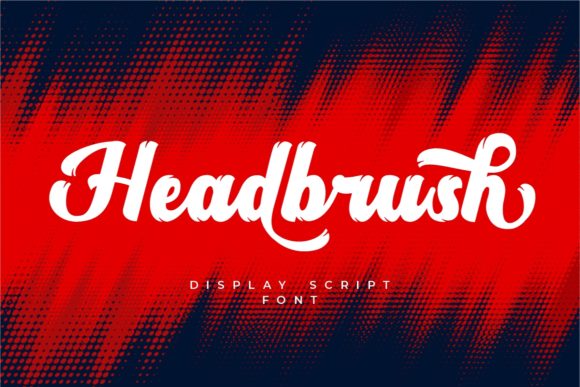
Headbrush: A Timeless Script Font for Handwritten Elegance
I recently found myself staring at a blank brand board, trying to find the right script font that could carry the personality of a new boutique I was designing for. The client wanted something warm, inviting, and with just enough character to stand out in a sea of minimalist trends. That’s when I discovered Headbrush, a script handwritten font that immediately felt like a perfect fit. Let me walk you through how it performed in real design scenarios — from logo drafts to social media layouts.
Headbrush for Wedding Invitations and Greeting Cards
Headbrush is one of those rare fonts that feels both romantic and professional. Its flowing strokes and timeless rhythm make it an excellent choice for wedding invitations where elegance and warmth are key. I used it on a sample set of digital invites, and the feedback was overwhelmingly positive — people said it looked "handmade" but still had the polish needed for formal events. Similarly, it worked beautifully on thank you cards and greeting card mockups. The delicate curves gave them a personal touch without being too informal or hard to read.
What stands out is how Headbrush maintains its charm across different formats. On printed cards, the ink bleed wasn’t an issue, and on digital versions, it rendered cleanly even at smaller sizes than typical script fonts manage. This makes it versatile for both print and digital use cases within the same project.
Headbrush in Logo Design and Brand Identity Projects
In logo design, especially for lifestyle brands, the right typeface can elevate the whole concept. For a small creative studio I was working on, I sketched a few logo concepts using Headbrush. It added a sense of authenticity and approachability — exactly what the founder wanted for their handcrafted product line. I paired it with a clean sans serif for contrast, which helped balance the organic feel of the script handwritten font with more structured elements.
When creating a brand board, I included Headbrush in several spots: the main logo, taglines, and even as a subtle accent in the packaging section. It brought a cohesive yet dynamic energy to the visuals. One thing I noticed was that while it’s great for short phrases and names, it might not be ideal for longer brand mottos due to the complexity of its characters.
Headbrush on Packaging Mockups and Business Cards
For packaging design, I tested Headbrush on a label for a handmade soap line. The font added a personal and artisanal vibe that matched the product perfectly. When placed on a matte-finish label, the softness of the script handwritten font complemented the natural ingredients and eco-friendly branding. However, I did limit its use to the title and kept body text in a simpler typeface to maintain readability.
On business cards, Headbrush performed surprisingly well. At 12pt size, it was still legible, especially when spaced out properly. The subtle variations between letters helped avoid visual clutter. I’d say it shines best in designs that don’t rely heavily on dense typography — think boutique shops, local cafés, or any small business looking to add a personal signature to their identity.
Headbrush in Social Media Layouts and Web Headers
Social media is all about first impressions, and Headbrush delivered. In a mockup for a skincare influencer’s Instagram post, I used it for the headline. The fluidity of the script handwritten font caught attention instantly and gave the content a handcrafted feel. It also played nicely with imagery of natural products and botanical illustrations.
On a website header, I used Headbrush for the site title of a fictional bakery. Paired with a light-weight sans serif for navigation, it created a warm and welcoming interface. The font didn’t strain the eyes despite its ornate style, and it scaled up beautifully on large hero sections. Just be careful with spacing and alignment — some characters have long tails that can interfere with other layout elements if not handled thoughtfully.
Headbrush for Quotes and Editorial Design
One of my favorite uses for Headbrush was in editorial design — specifically, for pull quotes in a blog layout. The font added a human touch to otherwise straightforward content. Readers mentioned they found the quotes more engaging because of the handwriting-like quality. As a designer, I appreciated that it didn’t overpower the rest of the layout, thanks to its balanced proportions and moderate contrast.
That said, I wouldn’t recommend using Headbrush for body text in articles or magazines. Its decorative nature makes it better suited for headlines, titles, or callouts. For long-form reading, stick to a clear serif or sans serif companion typeface.
Font Pairing Tips with Headbrush
When pairing Headbrush with other fonts, I found that a modern sans serif like Montserrat or Lato creates a strong contrast that enhances readability and hierarchy. If you want to keep the mood consistent, try matching it with another script handwritten font for alternate styles, but only in limited quantities to prevent visual fatigue.
Avoid pairing it with overly dramatic or highly stylized display fonts unless you’re going for a very specific look. The beauty of Headbrush lies in its subtlety and versatility — it should remain the focal point rather than blending into a busy typographic mix.
Licensing and Commercial Use Notes
Before finalizing any client work, always check the commercial font licensing terms for Headbrush. Like most premium fonts, it likely has restrictions on usage across multiple platforms or in print-on-demand products. Make sure it supports the languages you need, and confirm whether it includes webfont options if you plan to use it on websites or digital storefronts.
Also, take note of the included alternates and ligatures. These can add extra flair to your designs and help differentiate your brand assets from others using the same typeface. I found the swashes and flourishes particularly useful for customizing headers and logos.
Testing Headbrush Before Committing
If you're considering Headbrush for a project, I recommend testing it in various contexts before locking it into a final design. Try it in a logo draft, then place it on a business card mockup, a social media graphic, and maybe a packaging label. See how it behaves at different sizes and weights. Does it still feel elegant and readable? Does it align with the brand’s tone?
You can also run quick comparisons with similar script handwritten fonts to see if it offers a unique voice for your project. I’ve used it side by side with Raleway Script and Dancing Script, and Headbrush stood out for its timelessness and refined structure.
Headbrush for Creative Studio Identities and Boutique Branding
My latest test case involved a creative studio rebrand. They wanted to shift from a corporate aesthetic to something more artistic and community-driven. Headbrush became the cornerstone of their new identity system. Used in the studio name, it conveyed creativity and craftsmanship. The team loved how it felt authentic yet polished — the kind of font that says, “We care about details.”
In this project, I also integrated Headbrush into their packaging and website headers. The result was a unified visual language that resonated with both clients and collaborators. The script handwritten font helped bridge the gap between professionalism and personal expression.
One challenge I encountered was ensuring consistency across all materials. Because each letterform carries slight variation, it took a bit of tweaking to ensure it aligned well with supporting fonts and maintained a cohesive brand identity. But with thoughtful application, it worked seamlessly.
Final Observations and Recommendations
Headbrush is a premium script handwritten font that brings a sense of grace and authenticity to branding projects. Whether you're working on wedding invitations, greeting cards, or building a boutique brand identity, it adds a layer of personality that's hard to achieve with standard fonts.
It’s not the best choice for long paragraphs or small body text, but it excels in short, impactful statements — think logos, headers, quotes, and social media graphics. Small businesses, bloggers, and creative entrepreneurs will find it especially valuable for establishing a warm and memorable brand presence.
If you're ready to bring a little soul into your next project, give Headbrush a try. Test it in context, pair it wisely, and let it speak for itself. You might just find that this script handwritten font becomes your go-to for adding that personal, flowing touch to your design assets.