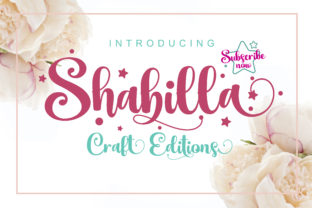
Shabilla Font: Modern Handwritten Style
As I sat down to design the first graphic for a seasonal sale campaign, the challenge was clear: how to make the message feel personal and inviting without losing visual impact. The brand’s aesthetic leaned toward warmth and approachability, so I reached for Shabilla, a modern and cute handwritten font that brings an authentic feel to any project. Its soft curves and playful strokes made it perfect for headlines and callouts, instantly adding a touch of personality to the layout.
Shabilla for Social Media Graphics and Instagram Posts
When working on Instagram content, especially for a lifestyle brand, the right font can make or break the visual appeal. Shabilla works well in this space because it balances charm with legibility. I used it for a series of quote graphics that promoted a new product line. The font added a handcrafted vibe that resonated with the target audience, making the content feel more relatable and engaging. On mobile screens, the font maintained clarity even at smaller sizes, which is crucial for scroll-heavy feeds.
For Instagram stories, I experimented with Shabilla on overlays and captions. It looked great against both dark and light backgrounds, offering enough contrast without overwhelming the viewer. The font also paired well with a clean sans serif for secondary text, creating a balanced hierarchy that guided the eye naturally through the content.
Shabilla for YouTube Thumbnails and Reels Covers
Designing YouTube thumbnails requires a quick visual hook, and Shabilla delivered exactly that. I used it for the title of a video promoting a digital course. The font’s organic shape stood out among more rigid typefaces, drawing attention while still feeling approachable. It worked particularly well when paired with bold colors and simple icons, reinforcing the brand’s creative identity without complicating the design.
On reels covers, Shabilla added a sense of movement and fluidity. It was ideal for short-form content where the message needed to be clear but not too formal. The font’s unique character helped differentiate the brand from competitors, making the content more memorable.
Shabilla for Email Banners and Web Design Headers
Email marketing campaigns often rely on strong, readable headers to capture attention. Shabilla served as an excellent choice for email banners, where its cursive style added a human touch to promotional messages. I used it for subject lines and header sections, ensuring the font didn’t overpower the rest of the design. Its versatility allowed it to work in both minimalist and more elaborate layouts, depending on the brand’s tone.
In web design, Shabilla functioned well as a display font for landing pages and section headers. It brought a sense of creativity and authenticity that aligned with the brand’s messaging. However, I avoided using it for long paragraphs or dense information, as it could become difficult to read in extended blocks of text.
Shabilla for Brand Campaigns and Promotional Templates
When building a set of promotional templates for a client, I integrated Shabilla into the design system for key elements like headlines, logos, and call-to-action buttons. The font’s handwritten nature gave the templates a cohesive, branded look that felt fresh and modern. It was especially effective in templates for social media posts, email campaigns, and print materials, ensuring consistency across all platforms.
For a seasonal sale campaign, I used Shabilla to create a series of promotional banners and digital ads. The font’s expressive style matched the campaign’s theme of celebration and exclusivity, helping to convey the brand’s personality in a way that felt genuine. It also worked well in combination with other fonts, allowing for flexible design choices without sacrificing visual harmony.
Shabilla for Wedding Invitations and Stationery Art
Although my primary focus was on digital campaigns, I also tested Shabilla for a wedding invitation project. The font’s elegant yet casual feel made it ideal for custom stationery, where a personal touch is essential. It worked well for titles, names, and dates, adding a warm, handmade quality that traditional fonts often lack. The font’s alternates and ligatures allowed for subtle variations, giving each piece a unique, artisanal feel.
For stationery art, Shabilla provided a versatile tool for creating custom designs that felt both modern and timeless. Whether used for greeting cards, thank-you notes, or event invitations, it offered a level of creativity that appealed to both designers and end users.